⚡
DC Fast Charging Hardware
High-capacity charging solutions designed for cars, SUVs, buses and fleet use cases across different site environments.

End-to-end EV charging infrastructure built around reliable charging hardware, turnkey deployment, digital operations and transparent site partnerships.
One company, three ways to build the charging network — hardware, software and partnerships.
High-capacity charging solutions designed for cars, SUVs, buses and fleet use cases across different site environments.
Digital operations for charger access, driver authentication, payments, billing and real-time visibility.
Site survey through commissioning — civil, electrical, charger installation, network integration and handover.
Four capacities, one connector standard — sized to the site.
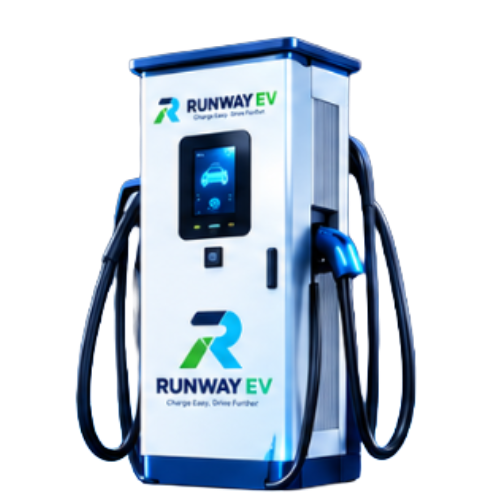
Suitable for locations where practical DC fast charging and regular dwell time meet.
Siemens SICHARGE RC 60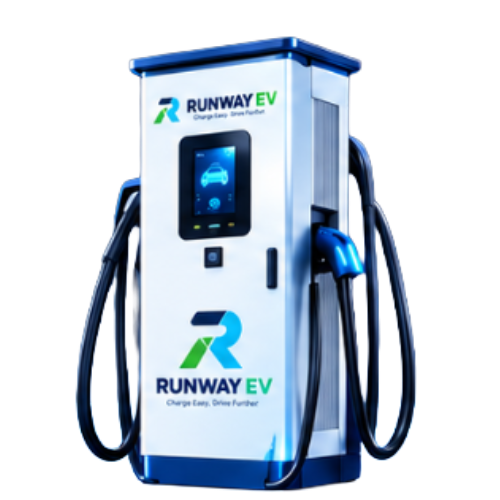
Higher-power charging for highway stops and locations designed around quick turnaround.
Siemens — model TBC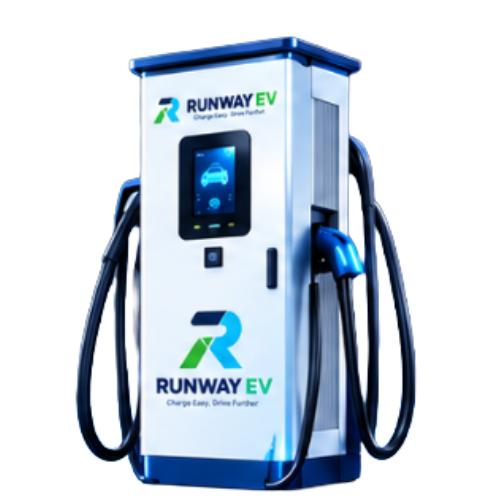
High-capacity charging for destination locations with multiple vehicle visits.
Siemens SICHARGE RC 180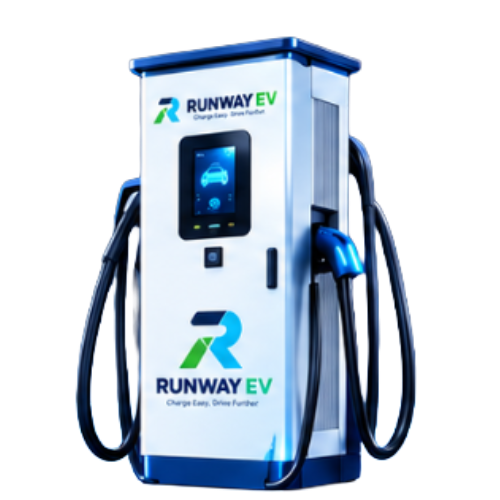
High-power infrastructure for corridor charging and larger commercial traffic.
Siemens SICHARGE RC 240Illustrative product renderings from the Runway EV partnership deck. Exact OEM/model availability should be confirmed for the selected project.
Load assessment, site suitability and feasibility study.
Electrical planning and utility coordination.
Foundation, canopy, spacing, cabling, and panel setup.
Charger installation, app integration, testing and handover.
From site survey to project handover, the deployment is structured as an end-to-end workflow.
Illustrative figures shown in the partnership deck. Actual performance depends on utilization, tariff, site conditions, electricity costs and project configuration.
The deck states a charger-capacity-linked turnkey range of ₹16.0 L to ₹42.0 L + GST, covering charger, installation, civil and electrical work up to the transformer connection. DISCOM grid-to-transformer connection charges are billed separately on actuals; internal cabling beyond 100 feet is extra.
Host the right space and Runway EV can coordinate the charging infrastructure and operating layer.
Physical space and parking bays, with site-level access and approvals required for the project.
Charger procurement, electrical connection, installation, commissioning, app/software and ongoing support.
Invest in a charger, host the charger, or combine the charger investment and site ownership model.
Pays through the charging experience at the site's posted rate.
Collected centrally, reconciled and paid out periodically.
DISCOM electricity bill plus the platform fee described in the deck.
The remaining amount becomes site-owner net income after the stated costs.
The deck describes a platform fee of 15% of revenue and uses an illustrative site rate of ₹21/unit. These are project assumptions and should be confirmed before commercial launch.
Long-term maintenance structure and support for charger uptime.
Remote monitoring and operational response framework.
Reconciliation of revenue and project reporting.
A single point of contact for project and operational support.
Load study, feasibility check and site readiness.
Charger procurement and project coordination.
Civil, electrical, charger and network deployment.
Commissioning, testing, launch and operations.